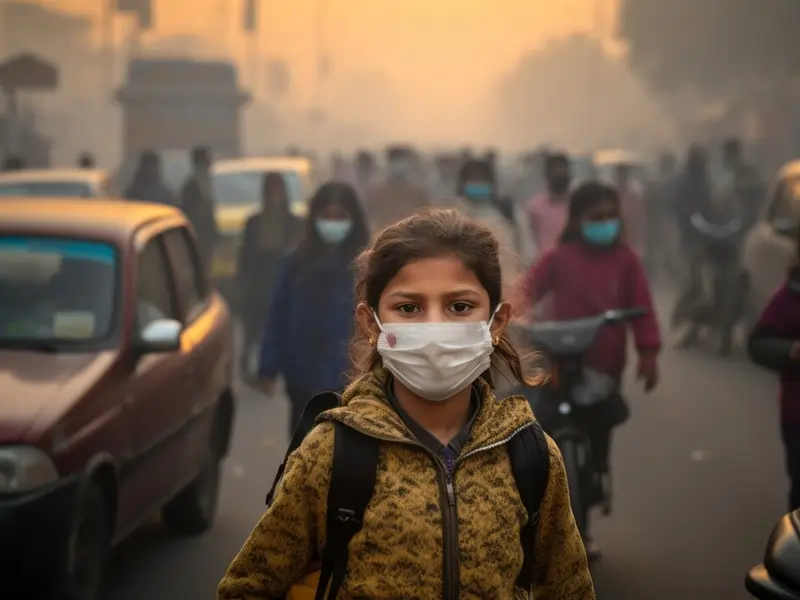
Rising Pollution Hazards in Kolkata — Causes, Consequences and Solutions
19 Nov, 2025
Page Views: 496
Kolkata’s skyline, its markets and its streets hum with activity — but behind that energy is a growing environmental challenge. Air quality in the city has worsened compared with WHO guidelines and remains a major public-health concern.
SOURCES
- Road dust and re-suspension — studies show road dust is a dominant contributor to PM10 and a material contributor to PM2.5 in the city. A TERI study commissioned by the West Bengal Pollution Control Board (WBPCB) found road dust as the largest contributor to PM10, and major for PM2.5 as well.
- Construction and demolition (C&D) activity — construction sites generate large amounts of PM10 and PM2.5 (concrete cutting, earthworks, material handling). Research on Kolkata’s construction dust shows concentrated hotspots in growing suburbs and new project areas. Construction activity is repeatedly flagged in WBPCB/CPCB inventories and academic studies.
- Vehicles — tailpipe emissions, tyre and brake wear, and resuspended road dust from traffic contribute meaningfully, though in Kolkata the relative share from vehicles is lower than in many other metros according to recent source-apportionment work.
- Industry and power — industrial emissions in the wider West Bengal region and nearby thermal sources add to local loads, particularly for PM2.5 and SO₂/NO₂ components.
- Residential/biomass burning & household fuels — in peri-urban and poorer neighbourhoods, household cooking with polluting fuels and seasonal biomass burning (for heating or agricultural residue) add to winter peaks. WBPCB has recorded extensive open biomass burning incidents in the state.
- Transboundary pollution / regional sources — wind patterns, cross-border transport of pollutants, and emissions from neighbouring districts/state coal-mining zones can elevate background PM2.5 levels.
Modern Kolkata is expanding — new residential and commercial projects, road widening, and demolition/reconstruction create large, repeated pulses of particulate pollution:
- Construction generates dust from excavation, material handling, concrete cutting, and vehicle movement. Several studies specific to Kolkata find high PM10/PM2.5 concentrations near active construction sites; building activity also spreads dust to surrounding residential areas.
- Rapid real-estate growth increases heavy-truck movements (materials, earthworks) and on-site operations which — without mitigation — raise local PM concentrations. WBPCB and CPCB inventories list construction and road dust among the top urban sources requiring targeted mitigation.
Construction amplifies particulate pollution, especially during dry months when dust is re-suspended and ventilation is poor.
COMPARISON
- Delhi is at the top (~108 µg/m³) and remains one of the most polluted large cities in the world.
- Kolkata’s annual average (~45.6 µg/m³) is lower than Delhi but still well above WHO guideline levels (and above India’s national limits). Kolkata’s 45.6 µg/m³ places it among India’s more polluted metros and, at times, it has entered the list of top-polluted cities globally in 2025 reporting.
These comparisons tell two important stories: (a) Kolkata is not as extreme as Delhi in overall PM2.5 annual average, but (b) it still exceeds safe levels and experiences dangerous spikes (winter stagnation, festival/fireworks windows, or dust events).
IMPACTS
Fine particulates (PM2.5) penetrate deep into the lungs and bloodstream, increasing risks of:
- Respiratory illnesses (asthma, bronchitis, COPD),
- Cardiovascular diseases (heart attacks, strokes),
- Premature mortality — large-scale epidemiological work attributes hundreds of thousands to over a million deaths in India annually (ambient air pollution is a leading avoidable risk factor). WHO and peer-reviewed studies document the broad disease burden.
Other impacts include reduced worker productivity, increased healthcare costs, and damage to crops and built heritage (acid deposition, soiling).
Kolkata isn’t static — there are encouraging signals:
- Recent winters showed improvement compared with earlier years: WBPCB reporting and news summaries noted Kolkata’s winter PM2.5 in 2024–25 was the best since 2019 in some months (December and January averages improved), attributed to cleaner fuels, stricter norms and public awareness — though averages still exceed safe limits. Continued effort could sustain and amplify these gains.
- Policy frameworks in place: WBPCB, CPCB and NCAP provide structured air-quality action plans and hotspot identification; these plans prioritize road dust control, construction mitigation, stricter industrial compliance and cleaner transport. Implementation is the next challenge but the regulatory architecture exists.
The evidence base — and pilot programs elsewhere — point to a set of interventions that would make measurable improvements:
Controlling dust at source (immediate high-impact)
- Dust management at construction sites: mandatory site coverings, wheel-washing stations, water-spraying, enclosed batching plants, and on-site monitoring. C&D mitigation reduces PM10/PM2.5 spikes around active projects. Studies by CEEW and academic groups highlight these as cost-effective measures.
- Paved & maintained roads: repairs to potholes, better street-cleaning, and localized vacuum-sweeper deployment reduce re-suspension. TERI/WBPCB source work ranks road dust as a top target.
Cleaner transport
Expanding EV infrastructure and last-mile electric public transport; promoting cleaner fuels and tighter emission testing; segregated freight movement hours to reduce daytime heavy-truck re-suspension.
Industrial and regional cooperation
Tighter stack emission controls, fuel-switching, and coordination across administrative borders to manage transboundary sources (coal mine emissions, nearby thermal plants).
Household & seasonal burning controls
Promote LPG/electric cooking and targeted programmes to reduce open biomass burning; community awareness and enforcement during critical seasons.
Data, monitoring and incentives
More local monitoring (low-cost sensors + reference stations), real-time public dashboards, and performance-linked funding for city wards to reduce measured PM. Use festival/peak-period data for targeted interventions (e.g., stronger traffic management, designated cleaner-firework zones).
Policy & finance
Festival-season and construction-season “clean air funds” — dedicated financing to ensure dust-mitigation equipment and worker training at construction sites. Insurance or conditional grants could encourage compliance.
(These solutions are consistent with recommendations from CPCB/WBPCB and think-tank analyses.)
- WBPCB & CPCB action plans: West Bengal has non-attainment city plans and targeted interventions for hotspots; Kolkata features prominently in state action plans with measures identified for road dust, construction, industry and domestic emissions. The national NCAP framework also provides funding channels and monitoring templates.
- Research & monitoring: Academic studies and commissioned source-apportionment work (TERI, university studies) have given Kolkata better, location-specific evidence to prioritise interventions — e.g., demonstrating road dust’s outsized role in PM10.
WAY FORWARD
Kolkata’s air-quality challenge is clear but not insoluble. The data show the main drivers — road dust, construction, residential burning and local industry — and the city has analytical tools and policy routes (WBPCB/CPCB plans, NCAP framework) to act. Targeted action on construction-site controls, road maintenance, cleaner transport and household fuel-switching can quickly reduce particulate peaks. The moderate improvements seen in recent winters show that progress is possible when policy, enforcement and citizen behaviour align. With coherent implementation — and active participation from the public, businesses (especially real-estate developers), and government — Kolkata can look forward to cleaner air, healthier citizens and a more resilient urban future.